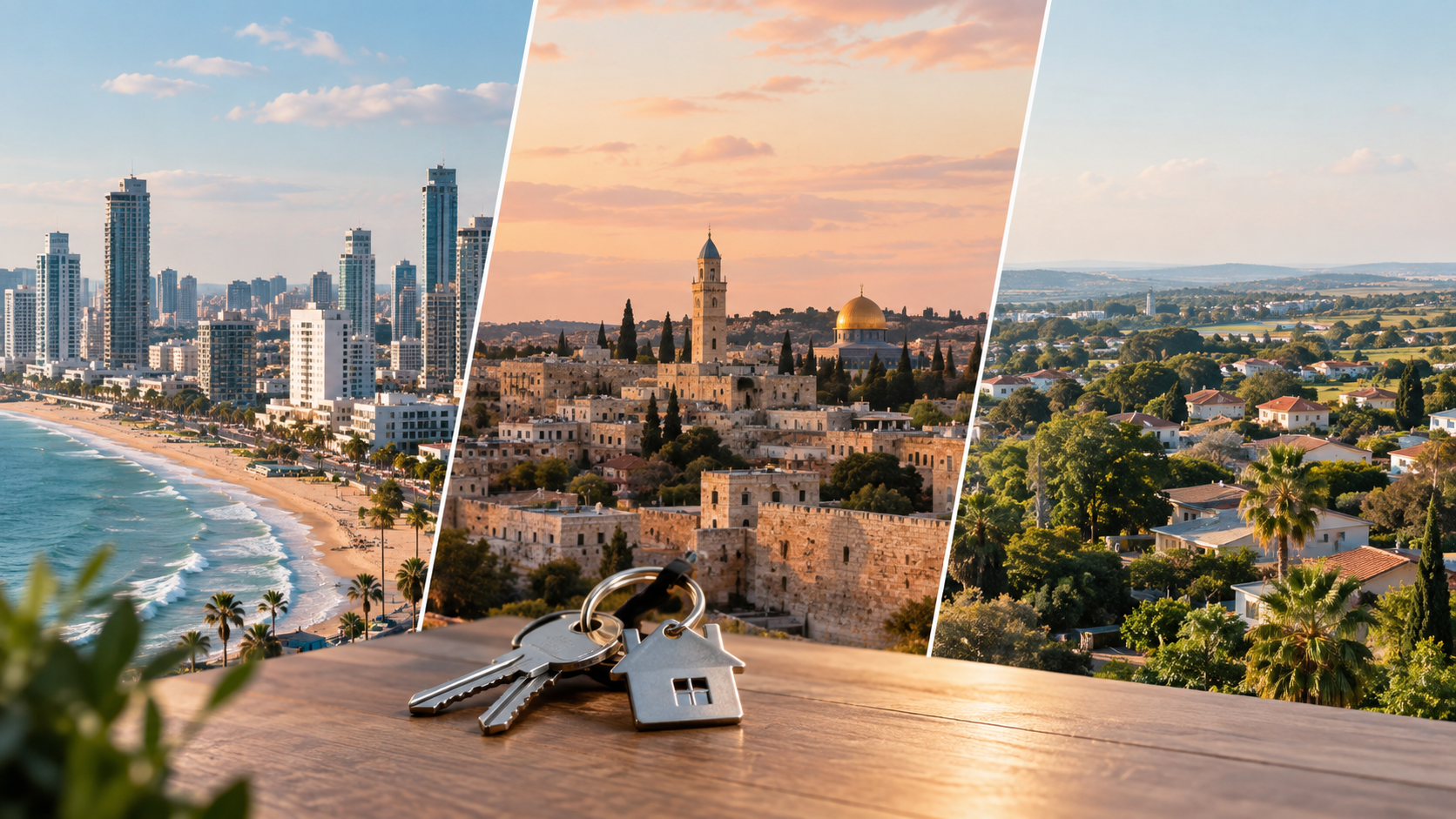


Tel Aviv’s real estate market combines high local tech-driven demand, international capital inflows, and strict supply limitations. Navigating investments across top neighborhoods—such as Florentin, Neve Tzedek, and the Old North—requires balancing yield expectations against capital appreciation, tax structures, and local regulatory requirements.
Key Points
- Market Resilience Drivers: High tech sector salaries, diaspora interest, and severe land scarcity support prime residential values.
- Infrastructure Catalysts: Light Rail expansion unlocks emerging investment potential in southern and eastern Tel Aviv districts.
- Neighborhood Segmentation: Florentin targets rental yield, Neve Tzedek leads ultra-luxury pricing, and the Old North drives urban renewal growth.
- Foreign Buyer Financing: Non-resident investors typically access up to 50% Loan-to-Value (LTV) mortgage financing through Israeli banks.
- Tax Considerations: Acquisition triggers progressive purchase tax (Mas Rechisha) starting at 8% for non-primary residential purchases.
- The Bottom Line: Long-term capital growth potential and steady rental demand make Tel Aviv real estate a premier asset class when backed by local management.
The Tel Aviv real estate market remains one of the most compelling and resilient in the entire Mediterranean region. As Israel’s undisputed financial, cultural, and technological capital, the “Non-Stop City” is more than just a place to live-it’s a global hub for innovation, a lifestyle destination, and a high-demand center for international investment.
But what does the market look like as we move through 2025? For foreign investors, new immigrants, and locals alike, Tel Aviv presents a unique (and often complex) set of opportunities.
Demand remains high, driven by the booming tech sector and a chronic shortage of new housing.
This guide explores the key 2025 market trends , the forces driving foreign investments, and the neighborhoods you need to be watching.

Tel Aviv as a Global Hub: More Than a Local Market
Understanding Tel Aviv requires looking beyond Israel’s borders.
Its real estate market is heavily influenced by global capital and talent. The city’s tech ecosystem, second only to Silicon Valley, attracts thousands of high-earning executives, engineers, and entrepreneurs from around the world. This international workforce creates a robust demand for high-end rental properties and luxury apartments, putting constant upward pressure on prices.
Furthermore, Tel Aviv is a lifestyle beacon. Its world-class beaches, vibrant nightlife, culinary scene, and open, liberal atmosphere make it a desirable location for a second home or a “pied-à-terre” for international buyers.
Unlike a purely financial investment, owning property in Tel Aviv is often a “lifestyle investment,” a tangible asset in a city they love to visit.
This dual-demand-from a high-salaried local tech workforce and a steady stream of foreign capital-is what makes the Tel Aviv market so resilient and unique.
2025 Market Trends: Demand, Prices, and Developing Areas
Navigating the 2025 market means understanding its core drivers.
- Demand and Price Dynamics: remain a central theme. Demand continues to outstrip supply, especially for modern, high-specification apartments. While the rapid price hikes of previous years have moderated, high-demand zones remain competitive. Indeed, according to a recent real estate trend report by the financial newspaper Globes, while the nationwide market has seen stabilization, prime Tel Aviv neighborhoods have still registered an average price appreciation of 4-6% in the last 12 months, particularly for new-build projects.
- The Impact of Infrastructure: The long-awaited opening of the Tel Aviv Light Rail (Red Line) is already reshaping the city. Neighborhoods once considered “too far” are now prime targets. This has unlocked new value in areas in south and east Tel Aviv, making them hotspots for investors looking for the next wave of growth.
- A “Flight to Quality”: In a post-pandemic world, buyer preferences have solidified. There is a clear “flight to quality,” with high demand for larger apartments, properties with balconies or private gardens, and homes within walking distance of parks like HaYarkon or the beach. This trend is particularly evident in the luxury segment.
Why Foreign Investors Still Choose Tel Aviv in 2025
For international investors, Tel Aviv real estate serves several key functions, making it a cornerstone of many Israeli real estate investment strategies.
- A Stable, Tangible Asset: In a world of volatile stocks and currencies, Tel Aviv property is viewed as a “safe harbor” investment. It is a stable, tangible asset in US Dollar or Euro terms (as many high-end contracts are linked), located in a country with a strong rule of law.
- Strong Rental Market: The “Silicon Wadi” effect cannot be overstated. A constant influx of tech professionals, embassy staff, and foreign press ensures a steady stream of high-quality tenants, minimizing vacancy rates for well-managed properties.
- Capital Appreciation: While rental yields are not as high as in some other European cities, the long-term capital appreciation has historically been excellent.
Investors are often willing to accept a modest 2-3% yield in exchange for significant long-term value growth. - The “One-Stop-Shop” Service: The rise of professional firms offering both brokerage and property management in Tel Aviv has made remote ownership seamless. Investors can buy, renovate, and manage a property from anywhere in the world, knowing their asset is in professional hands.

Hot Neighborhoods: Where to Watch in 2025
While every corner of Tel Aviv has its charm, three neighborhoods stand out for their distinct appeal and investment potential in 2025.
1. Florentin
- The Vibe: Young, bohemian, and artistic. Florentin is Tel Aviv’s answer to SoHo or Shoreditch-a former industrial and artisan area transformed into a vibrant hub of cafes, street art, and loft-style apartments.
- The Opportunity: It’s still (relatively) more affordable than the city center, attracting young professionals, students, and artists. The new light rail station has massively improved its connectivity. For investors, it’s a prime location for short-term rentals and long-term rentals for the city’s creative class.
2. Neve Tzedek
- The Vibe: A historic, village-like oasis. As Tel Aviv’s first Jewish neighborhood, Neve Tzedek is characterized by its narrow, winding streets, low-rise buildings with red-tiled roofs, and luxury boutique shops.
- The Opportunity: This is the pinnacle of luxury-boutique living. Strict preservation laws mean new developments are rare, making existing properties highly coveted. It’s a favorite for international buyers seeking a quiet, charming, and incredibly central location just steps from the beach and Rothschild Boulevard. Prices here are among the highest per-square-meter in Israel.
3. The Old North (HaTsafon HaYashan)
- The Vibe: Classic, established, and green. This is the quintessential Tel Aviv experience for many. Bordered by HaYarkon Park to the north and the beach to the west, it’s an area of tree-lined streets, neighborhood cafes, and high-quality schools.
- The Opportunity: The Old North is the gold standard for families and long-term residents. The “opportunity” here lies in the wave of urban renewal (“Tama 38” and “Pinui-Binui”). These projects are transforming 1950s-era apartment buildings into modern, luxurious complexes with elevators, parking, and security-all while preserving the neighborhood’s beloved character.
Your Partner in the Tel Aviv Real Estate Market
Investing in or moving to Tel Aviv in 2025 is an exciting prospect, but it is not a market for the uninformed. Navigating the legalities, understanding neighborhood nuances, and securing the best price requires a professional partner.
Whether you are seeking a luxury penthouse in a new development or a high-yield investment property, our team at The Agency TLV specializes in the Tel Aviv real estate market. We combine data-driven insights with on-the-ground expertise to guide our clients to success.
Ready to explore the best of what Tel Aviv has to offer?
Discover our exclusive Tel Aviv real estate listings and let our expert team help you find your perfect property.
Frequently Asked Questions (FAQ)
Q: Can a non-resident get a mortgage in Israel?
A: Yes, it is possible for non-residents to obtain a mortgage from an Israeli bank, but the terms are often stricter than for residents. Typically, non-residents may be able to finance up to 50% of the property’s value. The process can be complex, so working with a brokerage that has strong relationships with banks is a significant advantage.
Q: What are the property taxes for investors in Tel Aviv?
A: When buying, you will pay a “Mas Rechisha” (Purchase Tax). For investors (i.e., this is not your only home), this is a tiered tax that starts at 8% and goes up. As an owner, you will also pay “Arnona” (municipal council tax), which varies by neighborhood and apartment size. We always advise consulting with a specialized Israeli real estate lawyer and accountant.
Q: Is Tel Aviv real estate a “bubble” in 2025?
A: This is a common question. While prices are high, they are supported by strong economic fundamentals: a booming tech sector, a severe and persistent housing shortage (limited land), and significant international demand. Most analysts do not see a “bubble” but rather a high-cost, high-demand market. For long-term investors, the market remains one of the most stable and promising in the region.