
Tel Aviv’s luxury penthouse market represents a premier asset class driven by strict height limits, low inventory, and international demand from the diaspora and tech sectors. Investing in top-tier addresses—such as the beachfront corridor, Rothschild Boulevard, and Neve Tzedek—requires navigating progressive purchase tax (Mas Rechisha), foreign buyer financing, and bespoke luxury specs like private elevator access and extensive terraces.
Key Points
- Market Supply Dynamics: Strict height and heritage preservation rules constrain high-rise penthouse inventory, driving strong capital appreciation.
- Prime Neighborhood Benchmarks: Rothschild Boulevard, Neve Tzedek, and the central beachfront corridor command high demand and top per-square-meter valuations.
- Essential Luxury Specs: Top-tier penthouses require private direct elevator access, extensive outdoor terrace space, high smart-home integration, and full-building concierge services.
- Non-Resident Purchase Tax: Foreign investors face progressive purchase tax rates (Mas Rechisha) ranging from 8% to 10% on high-value residential acquisitions.
- Mortgage & Capital Flow: Israeli banks offer mortgage financing to non-residents (typically up to 50% LTV), requiring compliance with Bank of Israel currency transfer reporting.
- The Bottom Line: Penthouse acquisitions in Tel Aviv offer strong capital preservation and long-term liquidity when backed by comprehensive tax and legal planning.
Tel Aviv does not simply grow – it rises. Over the past decade, the skyline above the White City has been redrawn by a generation of architects who understand that premium height commands premium price. Luxury penthouses for sale in Tel Aviv are no longer a niche sub-market; they represent the clearest expression of a city that has graduated from regional tech capital to a genuine global address.
Buyers arriving from New York, London, Paris, and across the diaspora are not merely purchasing property. They are acquiring a position on one of the Mediterranean’s most prized ridgelines – a vantage point above the Bauhaus streetscape, above the beach, and above a market that has proven remarkably resilient through cycles that rattled real estate elsewhere. This guide walks through every dimension of that market: the economics, the geography, the amenities, and the process.
Why Tel Aviv Luxury Real Estate Continues to Outpace the Market
Supply constraints are the single most important structural factor. Tel Aviv is a dense, low-rise city by regulation and tradition. Height restrictions and heritage preservation rules mean that genuinely tall residential buildings – the ones where a penthouse carries unobstructed sea views – are few, and new permits for them are rarer still. When a new tower does receive approval near the waterfront, its upper floors are allocated before the roof is poured.
Demand, meanwhile, is multi-directional. Local buyers with liquidity concentrated in the technology sector continue to trade up. The diaspora – particularly American, French, and British nationals with Israeli roots – treat Tel Aviv property as a long-term hedge and an emotional anchor. Foreign nationals without residency connections have also grown as a buyer cohort, drawn by the city’s Mediterranean lifestyle and the legal framework that permits non-residents to purchase property in Israel with relatively few restrictions.
Pricing metrics reflect this dynamic. Prime residential values in central Tel Aviv and along the beachfront corridor have appreciated substantially over the past five years, with penthouses outperforming standard apartments in both capital growth and rental yield. Dollars-per-square-meter figures for top-floor units in trophy buildings now rival – and in some cases exceed – comparable positions in cities such as Barcelona, Lisbon, and Athens.
A further tailwind comes from the shekel. When the shekel weakens against the dollar or euro, international buyers gain purchasing power in real terms, compressing the effective cost of acquisition. Sophisticated investors track this currency dimension as carefully as they track property fundamentals.
Prime Neighbourhoods for High-End Penthouse Investments
Location within Tel Aviv shapes everything: the quality of light, the character of the building, the type of buyer and tenant pool, and ultimately the long-term capital story. The table below maps the city’s key luxury neighborhoods against the variables that matter most to a penthouse buyer or investor.
| Neighbourhood | Typical Penthouse Price Range | Key Layout Appeal | Signature Amenities | Investor Demand |
| Rothschild Boulevard | $4M – $12M+ | Wide terraces, city panoramas, Bauhaus backdrop | Private elevator, rooftop pool, 24/7 concierge | Very High |
| Neve Tzedek | $3M – $9M | Boutique scale, courtyard views, historic character | Designer kitchens, private garden terraces, spa | High |
| Central Beachfront (Gordon-Hilton) | $5M – $20M+ | Mediterranean sea views, open-plan living | Infinity pools, beach-access lobbies, smart-home tech | Very High |
| Tel Aviv Port (Namal) | $3.5M – $8M | Industrial-chic loft conversions, harbour views | Private moorings nearby, wellness suites | Growing |
| Ramat Aviv Gimmel | $2.5M – $7M | Spacious family layouts, greenery, quiet prestige | Residents’ gym, EV charging, security systems | Stable-High |
| Old North (Dizengoff-Ben Gurion) | $2M – $6M | Mid-rise boutique buildings, cultural proximity | Rooftop lounge, filtered sea glimpses | High |
Rothschild Boulevard
The boulevard is Tel Aviv’s most architecturally significant address. Rows of UNESCO-recognized Bauhaus buildings line the promenade, and the towers that rise above them – mostly in the cross streets just off the boulevard itself – offer a visual dialogue between heritage and modernity. Buyers here are typically drawn to the urban energy: high walkability, proximity to the financial district, and a cultural density that few other addresses in Israel can match. Penthouses on this axis are also among the most liquid assets in the country, with strong resale demand from both local and international buyers.
Neve Tzedek
If Rothschild represents ambition, Neve Tzedek represents refinement. Tel Aviv’s oldest neighbourhood has been painstakingly restored over decades and now attracts buyers who value boutique scale over tower prestige. Penthouses here tend to be smaller in absolute floor area but extraordinarily high in specification – bespoke joinery, private roof terraces planted with olive trees, and interiors by Tel Aviv’s most respected designers. The neighbourhood’s short walking distance to the beach and its gallery-and-restaurant culture make it a consistent favourite among European diaspora buyers.
Central Beachfront Corridor
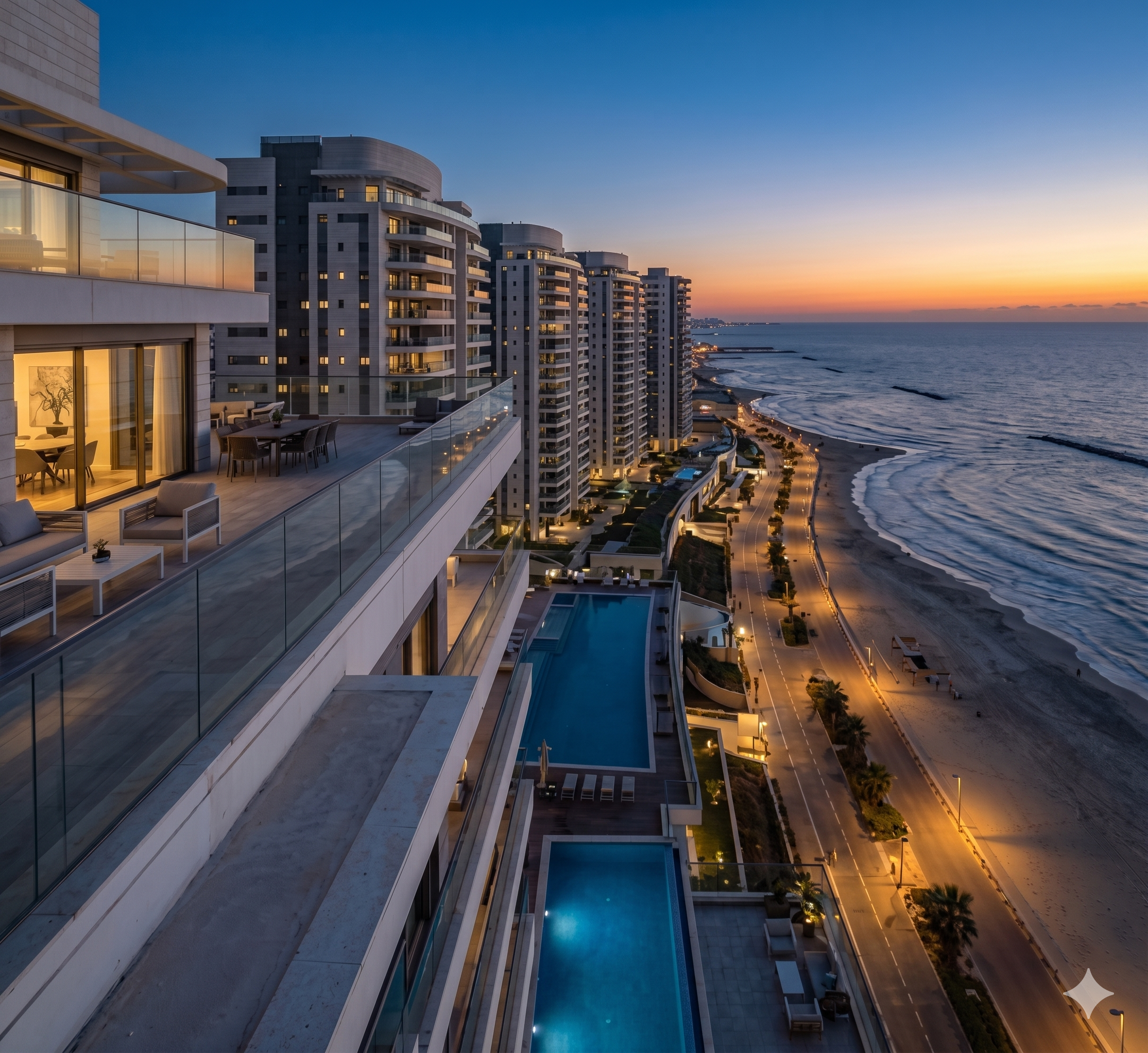
The stretch from Gordon Beach to the Hilton Hotel represents Tel Aviv’s most internationally legible luxury address. Buildings here speak the language of Miami and Monaco: floor-to-ceiling glazing, private pools at penthouse level, concierge services modelled on five-star hospitality. Prices per square metre at the upper end of this corridor are among the highest in the country, and the buyer profile skews heavily international. For pure capital value and global comparability, this corridor sets the benchmark.
Signature Amenities of Tel Aviv’s Most Exclusive Properties
The definition of luxury amenity has shifted considerably in the Israeli market over the past several years. The early markers – granite countertops, a doorman – have given way to a far more demanding checklist shaped by buyers who have owned property in London, New York, and Singapore.
Private Vertical Access
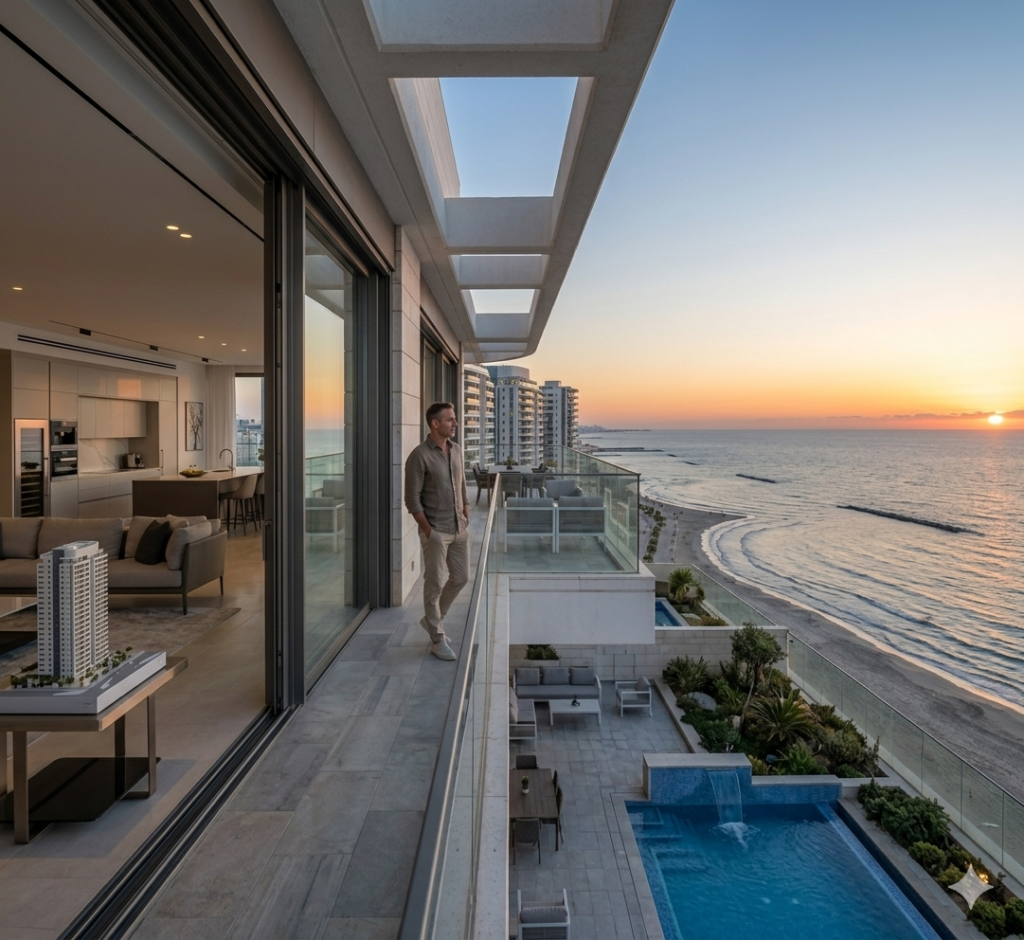
Top-tier penthouses now routinely include a private elevator that opens directly into the unit’s entrance hall, bypassing shared lobby areas entirely. This is not merely a convenience – it is a security and privacy standard that high-net-worth buyers treat as non-negotiable. Buildings without private vertical access are increasingly difficult to position at the top of the price range.
Outdoor Living at Altitude
Tel Aviv’s climate – over 300 sunny days per year – means that the ratio of outdoor to indoor space is a primary specification metric. The most sought-after penthouses allocate significant square meterage to wraparound terraces, loggia areas, and in the case of top-floor duplexes, private roof gardens. Some units include outdoor kitchens, plunge pools, and screening areas designed for year-round use.
Smart Home Integration
Automated climate control, motorized sun shading, integrated audio-visual systems, and biometric access are now baseline expectations in new-build luxury product. The more sophisticated developments offer pre-commissioning by technology consultants before handover, ensuring that all systems are calibrated to the buyer’s preferences from day one.
Wellness Infrastructure
Dedicated residents’ wellness facilities – spa rooms, heated indoor pools, meditation studios, and fully equipped gyms – are increasingly common in Tel Aviv’s premium residential towers. Some buildings also provide partnerships with nearby medical clinics and health professionals as part of a comprehensive lifestyle offering.
Building Services
Round-the-clock concierge, valet parking, secure package receipt, and dry-cleaning coordination are table stakes at the upper tier. The most competitive buildings go further: dedicated lifestyle managers who can arrange anything from restaurant reservations to charter aircraft, blurring the distinction between residential and hospitality services.
Navigating the Premium Purchase Process in Israel
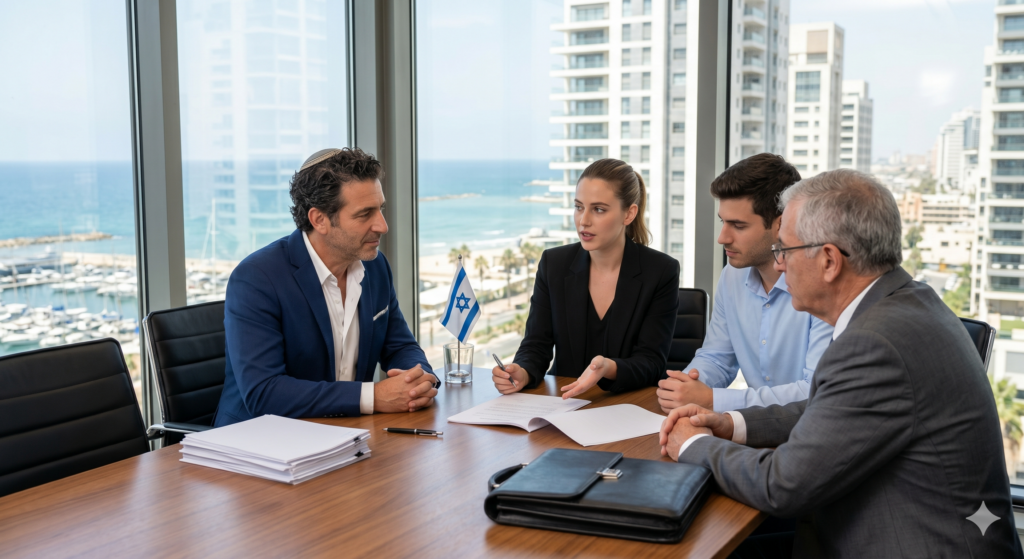
Purchasing property in Israel as a foreign national or diaspora buyer involves a well-defined legal framework that, once understood, is more accessible than many international buyers initially expect. Non-residents are legally entitled to purchase residential property in Israel without special permits, and the transaction process follows familiar international conventions with a few local specifics worth understanding from the outset.
The first step is invariably selecting the right advisory team. Israeli real estate transactions are conducted through licensed real estate agents and validated by lawyers who specialise in property conveyancing. The legal landscape – including purchase tax brackets, mortgage regulations for foreign nationals, and the nuances of purchasing in a building that is still under construction – requires specialist input. The team at The Agency TLV has published a detailed resource on How to Choose the Right Real Estate Brokerage in Israel: (2025 Guide), which covers everything from licensing requirements to questions buyers should ask before signing a mandate.
Once advisory relationships are in place, the process moves through several structured stages. The buyer and seller agree on heads of terms – price, completion timeline, and any specific conditions – before a formal purchase contract is drafted by the seller’s lawyer and reviewed by the buyer’s lawyer. A deposit, typically ten percent of the purchase price, is paid on contract signing. The balance is transferred on completion, which is often timed to coincide with key construction milestones in off-plan transactions.
Purchase Tax (Mas Rechisha)
All buyers in Israel pay purchase tax on the transaction value. The tax is progressive, with rates varying depending on whether the buyer is a first-home purchaser, a second-home purchaser, or a foreign national. For non-residents and for Israeli residents purchasing a second property, the applicable rates are higher than those for first-home buyers. Given the typical price points involved in luxury penthouse transactions, purchase tax represents a meaningful line item that must be factored into total acquisition cost from the outset.
Betterment Levy (Hetel Hashbacha)
Properties that have benefited from planning improvements or zoning changes may carry a betterment levy, typically borne by the seller but occasionally negotiated as part of the purchase terms. Buyers of off-plan units in new towers should clarify with their lawyer whether any such levy applies before contract exchange.
Mortgage Availability for Foreign Nationals
Israeli banks do extend mortgage finance to foreign nationals, though the loan-to-value ratios available are lower than those offered to residents. Buyers funding acquisitions from overseas capital will also need to navigate Bank of Israel reporting requirements for large inward transfers. Specialist mortgage brokers who work exclusively with non-resident buyers can streamline this process considerably.
For a broader overview of the legal and financial framework, The Agency TLV’s editorial team has also written extensively on Buying Property in Israel as a Foreigner: 10 Essential Tips – required reading before any viewing trip.
Frequently Asked Questions (FAQ)
The most common questions from international and diaspora buyers considering luxury penthouses in Tel Aviv.
Q: What are the property taxes for investors buying a luxury apartment in Tel Aviv?
A: When buying, you will pay a Mas Rechisha (Purchase Tax). For investors – meaning this is not your only home – this is a tiered tax that starts at 8% and rises to 10% on the portion of the purchase price above approximately NIS 6 million (a threshold adjusted annually). As an owner you will also pay Arnona, the municipal council tax, which varies by neighborhood and apartment size. At typical penthouse price points of $3 million and above, purchase tax alone can represent $300,000 to $600,000 or more in additional acquisition cost. We always advise consulting with a specialized Israeli real estate lawyer and accountant before committing to a transaction.
Q: What price-per-square-meter should buyers expect for prime penthouses in Tel Aviv in 2025?
A: Prime penthouse pricing in Tel Aviv’s most desirable locations – the central beachfront corridor, Rothschild Boulevard, and Neve Tzedek – currently ranges from approximately NIS 80,000 to NIS 150,000+ per square meter of usable indoor space. Terraces are typically valued at 30 to 50 percent of the interior per-meter figure. At current exchange rates this translates to roughly $22,000 to $42,000 per square meter at the high end, positioning Tel Aviv’s best addresses between Barcelona and Monaco on the global luxury residential scale. Secondary-market penthouses in older luxury buildings typically trade at a 15 to 25 percent discount to equivalent new-build product – which can represent a strong entry point for buyers willing to renovate.
Q: Can a non-resident rent out a Tel Aviv penthouse, and how is the income taxed?
A: Non-resident owners face no legal prohibition on renting out residential property in Israel. Long-term leasing and short-term rental platforms such as Airbnb are both permissible, though each carries distinct tax treatment. For long-term rental income, owners can elect to pay a flat 10% tax on gross rental receipts – without deducting expenses – or pay at the marginal rate on net income after allowable deductions. Short-term rental income is generally treated as business income and may attract VAT obligations depending on the volume of activity. Non-resident landlords are required to appoint an Israeli-resident tax representative and file annual returns with the Israeli Tax Authority. Given the strong short-term rental demand along the beachfront – particularly during Jewish holidays, the summer season, and major tech conferences – many non-resident owners achieve yields that meaningfully offset holding costs.
About The Agency TLV
The Agency TLV is a luxury real estate brokerage specializing exclusively in premium residential properties across Tel Aviv and the greater metropolitan area. The team advises Israeli residents, diaspora buyers, and international investors on acquisitions, sales, and portfolio strategy across the city’s most sought-after addresses.